
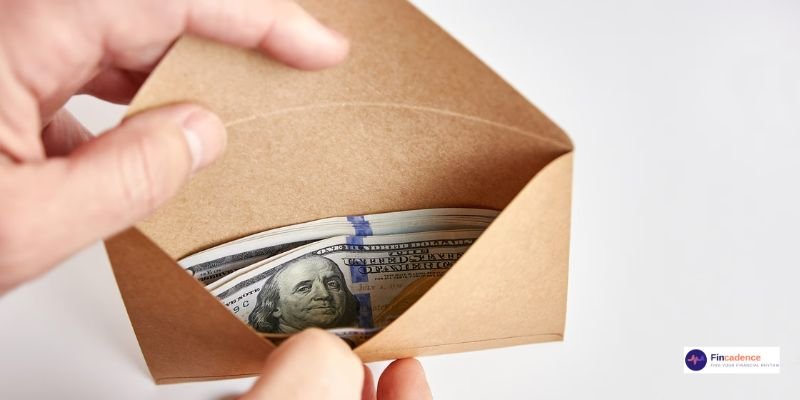
If you have ever been in the middle of the month and wondered where your spending money went, I know how frustrating that can be. The envelope system is especially helpful when it comes to expenses that fluctuate from month to month, like groceries, dining out, entertainment, clothes, gas and other costs. These are generally the categories where a budget can quietly fall apart.
I like this budgeting method because it sets a hard limit for each spending category. Instead of just swiping a card and checking the damage later, I can see exactly what I’ve got left for groceries, dining out or personal purchases. That’s my sign to pull back when the envelope starts to get low.
The idea is simple, but what makes the difference is using it wisely. Below I’ll walk you through which expenses are best suited for the envelope system, which ones typically aren’t, and how you can arrange your envelopes in a way that doesn’t make your monthly budget a second job.
What’s the Envelope System?
The envelope system is a budgeting system that divides your spending money into different categories. In the past, you would take cash and put it in physical envelopes labeled “Groceries,” “Gas,” “Entertainment,” “Eating Out,” and so on. You determine how much goes in each envelope based on your monthly budget.
Let us say that I have a grocery budget of $500. At the start of each month, I put $500 in my grocery envelope. All supermarket trips are subtracted from that amount. If there’s only $80 left in the last week, I know fancy snacks and impulse buys will likely have to wait.
The same principle can be applied in the digital world too. Instead of actual envelopes filled with cash, you can use budgeting categories or digital envelopes. The format has changed, but the rule is still simple: work out how much you can afford to spend before you start spending it.
The envelope system works really well for expenses like what?
The envelope system is great for things like groceries, eating out, entertainment, gas, clothes, household stuff, hobbies and personal spending. What do these categories share? They are cost-adjustable.
You might be feeling frugal that month and pay $1500 for rent. Your eating out costs are different. One dinner turns into two, a nd then someone mentions brunch and the food budget starts to sweat. And it is that flexibility that makes envelopes so effective. You decide in advance that you will spend $150 on dining out or $100 on entertainment. Once that money is gone, you stop spending in that category or intentionally make a change somewhere else in your budget.
The method therefore creates a visible boundary around expenses that are otherwise easy to underestimate. You are not necessarily telling yourself “no.” You are deciding how much “yes” you can actually afford.
Why Variable Expenses Work So Well With Envelopes
Variable expenses change depending on your choices, habits, and circumstances. Groceries may cost $400 one month and $520 the next. Fuel can increase because of an extra trip. Entertainment might be almost nothing one month and surprisingly expensive the next.
That is why the envelope system is especially helpful for expenses like these. You have some control over how much you spend, which means a clear limit can actually influence your behavior. Fixed expenses behave differently. You cannot negotiate with your landlord every Tuesday because your entertainment envelope had a difficult weekend.
Variable categories give you room to make small decisions. You can choose the cheaper grocery brand, cook dinner instead of ordering food, postpone buying new clothes, or skip one paid activity. Each decision helps keep the category within its limit without necessarily affecting essential bills.
Best Expenses to Include in Your Envelope Budget
Some categories practically volunteer for the envelope method. Groceries are one of my favorites because supermarket spending can climb without feeling dramatic. An extra $8 here and $12 there looks harmless until you add everything together.
Dining out is another strong choice. The same applies to coffee, entertainment, clothing, beauty products, hobbies, gifts, household purchases, and personal spending. Gas can also work when your driving routine is fairly predictable.
For example, your monthly envelopes might look something like this:
| Expense Category | Monthly Envelope |
| Groceries | $500 |
| Dining Out | $150 |
| Entertainment | $100 |
| Gas | $180 |
| Clothing | $100 |
| Personal Spending | $120 |
| Household Items | $100 |
These numbers are examples, not rules. Your income, family size, location, lifestyle, and priorities should determine your actual amounts.
Fixed vs. Variable Expenses: Which Belong in Your Envelopes?
The easiest way to decide whether something belongs in an envelope is to ask one question: “Can I meaningfully control how much I spend on this during the month?”
Variable expenses usually get a yes. Fixed expenses often get a no. That distinction matters because the envelope system is especially helpful for expenses like discretionary and flexible purchases rather than bills with predetermined amounts.
| Expense | Type | Envelope System? | Why? |
| Groceries | Variable | Yes | Spending can be adjusted |
| Dining Out | Variable | Yes | Highly discretionary |
| Entertainment | Variable | Yes | Easy to limit |
| Clothing | Variable | Yes | Purchases can often wait |
| Rent/Mortgage | Fixed | Usually No | Predetermined payment |
| Insurance | Mostly Fixed | Usually No | Regular scheduled bill |
| Loan Payment | Fixed | Usually No | Required payment |
This doesn’t mean fixed expenses should disappear from your budget. They absolutely belong there. They simply do not always need their own cash envelope.
What Expenses Should You Avoid Putting in Envelopes?
Not every dollar needs to live in an envelope. Regular bills such as rent, mortgage payments, insurance, internet service, loan payments, and certain subscriptions are generally easier to leave in your bank account, especially when they are paid automatically.
Savings and investments deserve special attention too. I prefer treating them as planned financial priorities rather than whatever receives the leftovers at the end of the month. If you wait to save “whatever remains,” you may discover that your money has developed an impressive ability to disappear.
You should also be careful with large irregular expenses. Annual insurance premiums, vehicle repairs, holiday spending, or future travel may be better handled through sinking funds. You gradually save toward a known future cost instead of trying to squeeze a $900 expense into one ordinary monthly envelope. The goal is control, not creating an envelope for every transaction you make.
How to Set Up an Envelope Budget Step by Step
Start with your take-home income and regular financial obligations. Pay attention to rent or mortgage payments, utilities, debt, insurance, savings, and other necessities before deciding how much is available for flexible spending. Next, review your recent spending. I recommend looking at a few months rather than guessing. You might believe you spend $250 on groceries, only to discover your bank statements have a very different story to tell.
Choose several categories where overspending happens most often. Because the envelope system is especially helpful for expenses like groceries and discretionary purchases, those are sensible places to begin. Set a realistic amount for each category and fund the envelopes when you receive income. Then subtract every relevant purchase from the correct envelope.
Most importantly, review what happened at the end of the month. A budget is not carved in stone. Adjust amounts as you learn what your real life costs.
How Much Money Should You Put in Each Envelope?
There is no magical grocery number or perfect entertainment allowance that works for everybody. Your envelope amounts should reflect your actual income and reasonable spending needs.
Imagine your previous three months of grocery spending were $580, $540, and $560. Setting next month’s envelope at $250 because you suddenly feel motivated probably isn’t budgeting. It is wishful thinking wearing a calculator. A better starting point might be close to your recent average, followed by a manageable reduction if you need to save more. Then watch what happens.
I once tested this idea with a simple dining-out budget. The interesting part was not that I suddenly stopped wanting restaurant food. I didn’t. The difference was knowing exactly what remained. When the envelope had $24 left, ordering a $30 meal suddenly felt much less casual. That little moment captures the strength of envelope budgeting: limits become visible before the money disappears.
Cash Envelopes vs. Digital Envelopes
Physical cash makes spending feel remarkably real. Handing over three $20 bills can feel very different from tapping a card for $60. For people who regularly overspend with cards, that small psychological difference can be useful. Cash does have drawbacks. Carrying it is inconvenient, online purchases become awkward, and losing an envelope is considerably worse than forgetting a budgeting-app password.
Digital envelopes solve many of those problems. You can create spending categories and track purchases without carrying cash. This works especially well for people who pay for almost everything electronically.
The best version is simply the one you will consistently use. If physical envelopes make you more aware of spending, use them. If cash makes budgeting so inconvenient that you abandon the method after five days, go digital. A budgeting system should create discipline without making normal life unnecessarily difficult.
Common Envelope Budgeting Mistakes to Avoid
The first mistake is creating too many categories. Do you really need separate envelopes for coffee, sandwiches, pizza, desserts, and “emergency tacos”? Probably not. Start with a manageable number of broader categories. Another mistake is setting limits that are far too strict. If your family normally spends $700 on groceries, immediately cutting the category to $300 may look impressive on paper but become frustrating in practice.
Then there is envelope borrowing. Your entertainment money disappears, so you quietly steal $50 from groceries. A few days later, grocery money runs low, and you borrow from clothing. Soon your envelopes are playing musical chairs. If moving money between categories becomes routine, the original limits stop meaning much.
Finally, track digital transactions carefully. Whether you use cash or electronic categories, every purchase needs somewhere to go. The system only tells the truth when you record spending honestly.
Is the Envelope System Right for You?
Envelope budgeting can be especially useful if you know where your money should go but struggle with what actually happens after payday. It creates boundaries around the categories where small purchases repeatedly add up.
It may also suit budgeting beginners because the concept is easy to understand. There’s no need for a complicated spreadsheet full of formulas. You need categories, spending limits, and the ability to stop or adjust when a category is low. But it’s not perfect for everyone. If you already budget carefully and rarely overspend, you may not feel the need to use physical envelopes. “Most people who do most of their shopping online might prefer a digital version.”
To me, the real test is simple: does the method make you more intentional with money? Yes, keep it. If it is just more work and doesn’t change your decisions, then you might want to try another budgeting method.
Summary
The envelope system is especially useful for expenses that are flexible and easy to overspend on, such as groceries, dining out, entertainment, clothing, gas, hobbies, and personal purchases.
You don’t have to get started with 15 envelopes or turn your life upside down overnight. Pick 3 categories that tend to cause problems. Set a reasonable limit for each and stick to those limits for 1 month.
You will be surprised at what you see. The biggest benefit isn’t the paper envelope itself, or even the cash. It is conscious. You decide where your money is allowed to go, before dozens of small purchases decide for you. A good budget shouldn’t make you feel like crap every time you buy a coffee. Enjoy that coffee knowing the money for it was already in the plan.
Also Read About: 40-Year Mortgage: Pros, Cons & How It Works
Frequently Asked Questions
What kind of expenses are best suited for the envelope system?
The envelope system works great for things like groceries, eating out, entertainment, clothes, gas, hobbies and personal purchases. These costs vary and usually give you enough wiggle room to cut back or delay spending when an envelope starts to run out.
An envelope budget would look something like this: Let’s say you have $1,000 to spend on flexible monthly expenses. You can spend $500 on groceries, $180 on gas, $150 on eating out, $100 on entertainment and $70 on personal expenses. Each purchase is then charged to the proper category.
Does the envelope system work for fixed expenses?
It can, but physical envelopes generally don’t get as much from fixed expenses. Rent, insurance, debt payments and other predictable bills have set amounts. Envelope budgeting usually works better for expenses that you have some control over how much you spend.
Can you do the envelope system without cash?
“Yeah. The basic idea of digital envelope budgeting is the same. Instead of withdrawing some cash and marking envelopes, you create digital spending categories and track the amount of money left in each. This can be more convenient for online and card transactions.
What are the drawbacks of the envelope budgeting system?
Cash envelopes are not practical, especially with online shopping and automatic payments. Having cash means a risk of losing it. Digitally, you need to keep a running tab; too-strict envelope limits can make budgeting a hassle. The method works well when the categories and the amounts are realistic.
For More Articles: Fincadence.com