
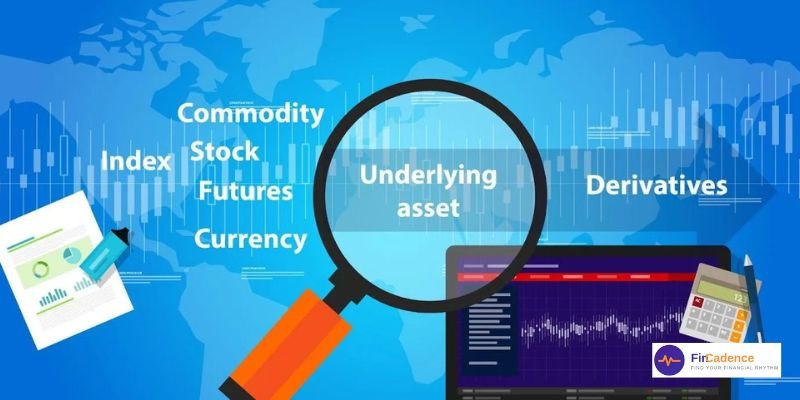
I recall the first time I heard the term “derivatives” in a discussion about finance. It was the kind of thing that only the Wall Street experts, all in fancy suits and looking at complex market charts all day, would get. But as I learned more about it, I realized that derivatives finance are not as intimidating as it sounds. A derivative is a financial instrument whose value derives from an underlying asset, such as a stock, commodity, currency or interest rate. Corporations, investors and financial institutions use these instruments to hedge against uncertainty and to make strategic decisions.
Suppose a farmer is worried that the price of his crops will go down before harvest, or an airline company is worried about increasing fuel prices. They can’t control the market. They can prepare for the market. This is where derivatives come in handy. They are a financial safety tool, helping people protect themselves against unpredictable price movements. They can be helpful or harmful, of course, like any powerful tool, depending on the use. A hammer can build a house, but in the wrong hands can cause havoc.
In this guide, you will learn how derivatives work, their main types, the benefits and risks of derivatives and real-world examples to understand why derivatives are such a vital part of global markets.
What is a financial derivative? Getting the basic idea
A derivative is simply a financial contract between two or more people where the value of the contract is derived from something else. The “something else” is the underlying asset. The underlying asset can be just about anything that has a measurable value – company shares, gold, oil, currencies, interest rates or market indexes.
“Derivatives are basically a financial relationship based on the possibilities of the future. Traders and companies don’t buy or sell the actual asset, but enter into contracts on how they think the price of the asset will change.
For instance, if an investor thinks that the stock price of a company will rise, they can purchase an option contract that allows them to benefit from this rise without having to buy the shares immediately. Similarly, a manufacturing company that uses raw materials may use derivatives to lock in prices and avoid unforeseen increases in costs.
The interesting thing is derivatives don’t create any value in themselves. Their value is tied to another market’s moves. The price of the underlying asset will also affect the value of the derivative contract.
That’s what makes derivatives useful and complicated. They allow people to deal with financial uncertainty, but they need to be used with good knowledge because the movements of the market can be both opportunities and losses.
How Do Financial Derivatives Function?
If we see derivatives as contracts on future events, the working mechanisms behind derivatives become much easier. A contract is signed between two parties agreeing certain conditions regarding an asset.
For example, suppose a coffee shop owner expects the price of coffee beans to rise in six months. The owner can now contract to buy coffee beans at a fixed price in the future rather than wait and take whatever price the market offers later. This is a financial safety net.
In another case, a trader might expect the price of gold to increase. Instead they could buy a derivative contract based on gold prices. If they are right in their prediction they may make money. They can lose if the market moves against them.
Several important elements affect how derivatives work:
- Underlying asset: The asset that determines the contract’s value.
- Contract terms: The conditions agreed upon by both parties.
- Expiration date: The date when the contract ends.
- Settlement method: How profits, losses, or asset exchanges are handled.
Derivatives involve expectations of future market movements, so they require careful analysis and risk management.
What Are Derivatives Used For?
The word “derivatives” for many people means risky trading. And while derivatives can be risky, their original purpose is often much more down-to-earth: hedging financial uncertainty. Derivatives are used extensively for hedging purposes. Hedging is protecting yourself against unwanted price changes. Businesses frequently use derivatives because they operate in unpredictable environments.
Take for example an airline company, which spends a lot of money on fuel. If oil prices go through the roof, operating costs can soar. The company is able to hedge these price fluctuations and plan expenses better using certain derivative contracts.
Another important purpose is speculation. Some traders use derivatives to anticipate future market movements. They try to make money by correctly predicting whether prices will go up or down. Market efficiency is also increased by derivatives. They give investors access to different markets, the ability to find prices and the transfer of risks from those who want to shed it to those who are willing to take it.
A way to think about it simply:
One wants to be protected from risk. Someone else is willing to take that risk for the possibility of profit. Derivatives create a system in which both sides can have it their way.
Types of Derivatives to Know About
There are several different types of contracts within derivatives. Different kinds have different roles and work in different ways. When you know these categories it makes the subject a lot easier.
Future Contracts
Futures are standardized contracts to buy or sell an asset at a given price on a future date. These contracts are often traded on exchanges and are used extensively for commodities, currencies and financial indexes. For instance, a farmer may use futures to lock in a selling price for crops before the harvest. This is a safeguard against falling prices.
Futures are also a method for investors to achieve market exposure without the need to hold the underlying asset directly.
Examples include:
- Oil futures
- Gold futures
- Stock index futures
- Agricultural futures
Options Contracts
Options provide buyers the right but not the obligation to buy or sell an asset at a specific price within a specific period of time.
Two main types exist:
Call options: These give the buyer the right to buy an asset.
Put options: They give the buyer the right to sell an asset.
For instance, a trader who believes that the stock price of a company will increase might buy a call option. The option may become more valuable if the stock price increases. Options are great for flexibility but they come with things like time decay and volatility in the market.
Forward Contracts
Forward contracts are similar to futures, but they are usually private contracts between two parties rather than standardized contracts traded on an exchange.
Companies often use forwards to hedge against currency risks.
For example, an international company that expects to receive payment in another currency may use a forward contract to hedge against adverse changes in the exchange rate.
Swaps: Swaps are the exchange of one financial obligation for another.
A typical example would be an interest rate swap where two parties exchange different interest payments. Large corporations and financial institutions frequently use swaps to manage their borrowing costs and financial risks.
Real-Life Example: How Companies Use Derivatives
A few years ago I read a story about a small farming business that had a rough time when market prices suddenly changed. One year the farmers had a bumper crop, but the prices went down because the supply was greater than the demand. They made good products but their income was poor.Later they started using futures contracts to lock in prices before harvesting. It didn’t make them rich overnight, but it gave them something of extreme value: predictability.
They could budget, pay their workers and run their business with more confidence. This example shows the real purpose of derivatives. They are not only about traders making quick profits. They are also about helping ordinary businesses survive unpredictable markets.
Benefits and Risks of Using Financial Derivatives
Like every financial instrument, derivatives have advantages and disadvantages.
Benefits of Derivatives
Some major benefits include:
- Protection against price changes
- Better financial planning
- Access to global markets
- Portfolio diversification
- Risk transfer between market participants
Businesses can operate more confidently because they have tools to manage uncertainty.
However, derivatives also carry risks.
Risks of Derivatives
The biggest concern is leverage. Many derivative contracts allow traders to control large positions with relatively small amounts of money. While this can increase potential profits, it can also increase losses.
Other risks include:
- Market volatility
- Lack of understanding
- Complex contract terms
- Poor risk management
That is why education matters. Derivatives are not inherently dangerous, but if you use them without understanding the risks, you can get into serious financial trouble.
Derivatives vs Traditional Investments: What’s the Difference?
“Traditional investments are when you own an asset directly. For example, when someone buys shares in a company they own part of the company.
Derivatives are another story. Derivatives usually involve investors having a contract for an asset, rather than the asset itself.
One example:
You buy stocks; you buy stock.
If you buy an option, you are buying a contract on those shares. Derivatives are mainly used for risk management, trading strategies and short-term opportunities. Traditional investments are often associated with long-term ownership. Neither method is better in principle. The best choice depends on your financial objectives, your knowledge, and your tolerance for risk.
Derivatives in Today’s Financial Markets
Derivatives have become a major component of the world’s financial system. They are used by banks, corporations, investment firms and individual traders for different reasons.
In big financial markets, derivatives are important because they shift risk. Without these tools many firms would have less ability to protect themselves against unexpected changes in prices, interest rates and currencies. Institutions such as investment banks and exchanges provide the platforms on which many derivative contracts are created and traded.
Derivatives are important all over the world and this shows that they are not just tools for speculation. They are also systems for improving financial stability and flexibility. However, they are complex and need to be used with responsibility. The smarter way is always to know the basics before you join in.
Frequently Asked Questions on Derivatives in Finance
1. What are derivatives in finance, in simple terms?
Derivatives are contracts whose value is derived from the value of something else, such as stocks, commodities, currencies or interest rates. They enable people to take a risk or attempt to profit from changes in price.
2. Are derivatives risky to invest in?
Yes, derivatives can be risky, particularly if leverage is involved. But when used correctly, they can also be useful tools to help manage financial risks.
3. What are the four main classes of derivatives?
The four most common types are futures, options, forwards, and swaps. Each type functions differently and serves different financial purposes.
4. Why do firms employ derivatives?
Primarily, derivatives are used by corporations to hedge against the uncertainty in price movements. Businesses might use them to hedge currency, fuel or raw materials costs.
5. Can a beginner trade derivatives?
Newbies can learn to trade derivatives, but they should have a good knowledge of markets, risks and strategies. It is very important to understand the basics before investing.
Also Read About: What Can You Do With a Finance Degree? Career Paths, Jobs, and Opportunities Explained
Closing Thoughts
Derivatives sound complicated when you first hear the word, but their purpose is surprisingly practical. They enable firms to hedge against uncertainty, investors to hedge risk, and they link different parts of the financial universe.
The key point is to understand that derivatives are tools. Like any tool, their value depends on how you use them. Armed with the right knowledge, they can provide valuable financial solutions. Without understanding, they can create needless risks. Get the basics down firs,t and you’ll be making smarter financial decisions.
For More Articles: fincadence.com